Key Cloud Considerations For A System Administrator
The job of a system administrator is probably one of the most unappreciated roles in all of IT. End users, developers, and everyone in between rely on system administrators. Sys admins spend hours upon hours, often in the middle of the night and on the weekends, running backups, software updates, and much more. They maintain the equipment that keeps you all running.
With the introduction of the cloud, system administrators are finally getting a much needed break. By shifting a company’s information technology to the cloud using the best tools available, system administrators can essentially outsource some of the things they spend so much time on. They can then better focus on other tasks, essential to what they do. Let’s look at five benefits of a cloud based phone system. We see how these benefits will improve both the system administrators work load. Also the responsiveness to end users and developers.
1. Focus More On Users Instead Of Hardware
Most system administrators find their time stretched thin. Between taking care of users and the computer hardware, maintaining the server infrastructure, and more, a system admin often feels like more of a firefighter than anything else.
When you make the transition to the cloud, you will have far less fires to deal with every day. When you migrate server infrastructure into the cloud along with thin clients for your end users, you will discover you have far less problems to deal with. On top of that, most providers will help you with support for their systems and your users.
This added assistance will free up your time so you can focus more on delivering a superb user experience to the employees at your company. You can concentrate on implementing all those projects you kept pushing back, simply because you didn’t have the time to get them done.
2. Less Fighting For Resources
If you are a system administrator in a small to medium sized business, you are already well aware of the fight for resources. Resources you need to ensure all your equipment and infrastructure keeps running 24 hours a day, 7 days a week. Add to that the cost of software licenses, upgrades, and all those extras you run into day in and day out, and chances are your budget is stretched pretty thin.
Cloud-based systems such as managed Exchange, SharePoint or an cloud hosted voice PBX are billed on a monthly basis. You know exactly how much it will cost. In most cases, you will find that these costs are actually lower than what you spend to keep all the equipment in house. Upgrades should also come free with a cloud setup. This makes it much easier to create and manage your IT budget.
3. Increased Flexibility
When you think about your systems, it often feels like a marriage of sorts. When you decide on a specific system, chances are you will have to stick with that system for a certain period of time. Migrating to a new platform can prove difficult and even costly. This is why you see so many businesses running software that is long past its prime.
Things work a little differently in the cloud. It’s very nature is much more flexible. You can easily move from platform to platform with very little effort on your part. If you need to expand one area, you can simply make a phone call and get it done, without having to worry about the impact to other systems. Cloud providers have to compete in a very tough market. Because of this, they often offer easy upgrade paths, to be as flexible as possible. This leads to your own IT structure being more flexible as well.
Not happy with your cloud provider? No problem. One simple e-mail or phone call and you begin the process of migrating to another cloud provider. Most cloud hosts include free migration as part of their packages and will help you get it done in no time flat. This provides the flexibility to expand and move your services around at will.
4. Less IT & Network Security Concerns
We all know how important IT and network security is today. We are bombarded by news stories of hacks around the world and if you are a system administrator, you wonder if your network will be next. Investing in security and then maintaining that system can be a daunting and expensive task. In fact, in today’s world security of networks is one of the system admins biggest sources of stress. In case you deal with this daily.
Hosting providers today bring with them their own security infrastructure that most system admins only dream of. With secure data centers across the world and trained professionals designed to prevent attacks, a system administrator can rest easy knowing their network is safer. If a breach does occur, these professionals are trained experts in dealing with them. This includes both stopping the attack and discovering exactly what got hit.
5. Improved System & Network Performance
As a system admin you are always concerned about the performance of your systems. You work tirelessly to provide the quickest connection and fastest speeds for your users so they don’t have to fight with a slow system just because they want to get a few things done.
Cloud providers understand this. They work very hard to provide systems for your company that are fast and reliable. In addition, these providers are constantly improving their networks and optimizing them for the best performance possible. This usually means new upgrades, software updates, and much more. At the end of the day, you will have a system that is much more robust and powerful. This provide your users the best performance possible, at a fraction of the cost of what you would normally spend.
Final Thoughts For System Administrator Professionals
The advent of the cloud marked a new era in computing. Finally, system admins can shed much of their equipment in favor of the cloud. Sure, there will still be desktops and laptops to maintain, especially if, as most Dev Ops do, you make use of a linux laptop or desktop. But much of the server infrastructure can easily be migrated to the cloud.
This migration will provide system admins, developers and even end users, the support and performance needed in an increasingly fast paced and mobile working world, to get the job done. For a system administrator, it means more time to focus on improving the overall user experience and providing increasing value for the end user.
If you’re a system administrator, we thank you. We hope you see the many benefits of migrating to cloud environment for you and your company. Got more questions about the benefits of a cloud environment for your business? Contact Fastmetrics today about direct connections to AWS, Azure, Google Cloud and more.
About Fastmetrics, Inc. Building & Business ISP
Since 2002, Fastmetrics is the Bay Area’s only dedicated business ISP. We provide telecommunication services in California and the San Francisco Bay Area. Reliable service – backed by better live and local support. From install to 24-7 proactive monitoring, get treated like a VIP customer. Not a number by a faceless call center. We specialize in managed business internet and phones, dedicated high speed business fiber internet, business WiFi, SIP voice solutions / UCaaS and managed network services. We are a Microsoft and Cisco Meraki Partner. Our team are Certified Cisco Specialists, Ubiquiti Enterprise Wireless Accredited and Polycom Authorized Solution Advisors. We take care of your business network, so you can focus on growth.
Is your business using or considering a cloud phone system? Today, e-mails, texts and instant messaging accounts for a significant portion of daily communications. However, a good old fashion phone call is far from obsolete. That’s particularly true in the business world.
Regardless of business size or industry, a reliable phone service is a necessity. As with many business decisions, selecting the right business phone system for your specific needs can be overwhelming.
In the past, many businesses were forced to implement a Public Branch Exchange (PBX). A PBX is an on-premise or on-site telephone network. A PBX required bulky hardware, dedicated storage and a significant investment in management and maintenance. As such, a PBX phone system often lacked affordability, flexibility and security.
Take office phone presence with you, via a flexible cloud setup
Thanks to ongoing advancements in networking and digital technology, the traditional PBX is no longer the only option when it comes to business phone systems. Instead, many businesses and organizations are turning to external virtual hosted PBX solutions, also referred to as cloud phone systems.
A cloud phone system is managed off-site and accessible anywhere online. These IP powered phone systems make it easier for businesses to tap into enhanced communication features, without investing in on-site management and maintenance.
Not sure if cloud phones are right for you? Below are 5 reasons why today’s businesses are opting for the convenience, versatility and cost-effectiveness of cloud phone systems.
Businesses employing traditional PBXs must train, certify or designate an individual (or multiple) employees or hire external contractors to manage and maintain a PBX phone system. This limitation can create an environment where maintenance and updates are not only disruptive, but inefficient and costly. This can unnecessarily eat away at budget or other critical ITC tasks, preventing business growth and development.
A cloud phone system is hosted off-site. It is managed by a phone service provider. Business owners no longer need to sacrifice excessive financial or human capital to obtain reliable phone service, with enterprise-level features and functionality.
Administration of a cloud phone system is also simplified. Simple online access, like this web based metricVOICE dashboard, allow easy control of phone functions and setup. At any time, anywhere. No advanced IT work is required – anyone phone user can do it. Remote workers can be efficiently setup with phone service too. Shifting phone service from on-premise hardware to a cloud based solution, empowers users to make changes efficiently. Adding rules or setting up out of office, can be done with the click of a button.
Improved Security & Disaster Recovery
When businesses rely on an on-premise PBX, they’re typically housing all their equipment in a single location. This leaves a phone service vulnerable to everything from human error to power failures, fires, or natural disasters.
Conversely, a cloud hosted PBX utilizes remote data centers to mitigate that risk. Servers are protected by layers of physical and network security. This makes it difficult for outside threats to compromise services and information. Along that same line, many cloud phone systems provide redundancy to keep service secure and accessible. Because of this, service is maintained at www.venyu.com/disaster–recovery-services/ even if one or multiple servers suffer a geographical failure.
A Cloud Phone System Provides Global Reach
As the needs of a business, as well as their customers and employees extend beyond the physical boundaries of a single building, the importance of a communication system that can adapt to that need is essential to both scalability and security, not to mention a business’s reputation.
Because cloud phone systems can seamlessly integrate with mobile devices, owners and employees alike have access to the phone system regardless of where they are, allowing for seamless productivity. The same is true for companies that have or expect to have multiple locations. A cloud PBX can connect all locations with a unified front (e.g., one phone number can route calls to locations around the globe).
Cloud Flexibility & Remote Workforce Presence
Planning on scaling up business? Opening a new branch and need immediate access to phone based communications? With a cloud phone system, businesses can enjoy increased adaptability without sacrificing their bottom line. This flexibility isn’t limited to phone lines, which can be added and removed as needed. It is also attributed to mobile presence by smart phone apps and features which enable a truly mobile workforce.
Remote workers can be easily setup with business phone service with a cloud based system
Fastmetrics for example, offers customers access to a robust list of included phone features. These include basic business phone service requirements such as call forwarding, conferencing, auto attendants and voicemail to text. Also numerous advanced options, such as click-to-dial CRM integration via the metricCRMconnect Chrome extension.
Service & Call Cost Savings With Cloud Hosted Phones
Cloud business phone systems negate the need for unnecessary hardware maintenance, management and advanced administration. This is typically associated with on-premise PBX systems. In turn, companies can adapt and change as necessary. This brings significant savings to those who make the switch to cloud phone services.
How much can you save? That depends on a variety of factors, such as the number of lines you need. A recent report by Transparency Market Research suggests the cost of phone system ownership can decrease significantly, via a cloud based or virtual PBX. Other reports frequently suggest savings near 60% to 90%, particularly when international calling costs are factored in.
This notion is supported by Fastmetrics business phone service rates. We provide monthly phone service for as little as $20 a line. Our metricVOICE service is a completely managed service to ensure voice quality. It enables businesses to meet customer needs, whilst maintaining a cost-effective and versatile service. When it comes to communication, cloud phone services represent a way to achieve that goal.
Got questions about a cloud phone system or service benefits? Contact Fastmetrics.
Before you sign with a phone service provider, you’ll want to have a strong foundation of understanding about phone systems for small businesses. Go beyond simply knowing what features you want the small business phone system to have. Know the various types of systems out there. From phone systems that rely on traditional phone lines to make calls, to those that use broadband or fiber internet connections.
As far as features go, if you’re putting budget into a serious business phone system, you should be expecting to receive multiple lines, voicemail, conference calling capabilities and an auto attendant at the very least in return. Among the choices you’ll be facing for your small business phone system is whether to get a multi-line system, a Private Branch Exchange (PBX) system, a Voice over Internet Protocol (VoIP) system, or a cloud-based phone system. Let’s take a look at the most popular small business phone systems options and how to determine what will work best for your small business:
Multi-line Phone Systems
These more old-school phone systems are also known as key service units (KSU). These systems use an electro-mechanical switching device that controls the routing and operation of a traditional analog telephone system.
When considering how many lines your business needs wired into the office, it’s important to find a balance between not having more lines than you really need while also giving your business room to grow. If you have a business with less than 10 people, it’s also possible to take advantage of a KSU-less system in which the phone contains all the technology. This means the system doesn’t have to be permanently wired into the office space.
Private Branch Exchange (PBX) Phone Systems
Private Branch Exchange Systems (PBX) are essentially private phone networks for your office that give you more advanced features and options. At Fastmetrics, the system is actually cloud-based. PBX features can include call holding, routing to extensions, and conference calling. These phone systems are different from KSU systems in that the call routing does not occur through the phone unit or building’s wiring but is centralized. These systems, designed for companies needing to cater to more than 40 employees, used to be run on monstrous devices that took up an entire closet. Now, they can comfortably fit on a shelf.
Voice Over Internet Protocol (VoIP) Phone Systems
If you go with a VoIP phone system, it will run on your broadband internet connection rather than through your phone lines. When this technology first came out, it was very rough and reliability was an issue, especially as your phone system’s effectiveness was tied to your high-speed internet connection. Nowadays, a VoIP system offers a vast number of advantages: from the ease of installation and scale-ability to pricing and advanced features. Among these features is a VoIP system’s ability to integrate with your customer relationship management software (CRM), which can then automatically log interactions.
An IP powered phone system allows seamless communication outside of the officeVoIP systems also boast the ability to host a virtual receptionist or auto attendant to handle calls, as well as all the other bells and whistles that come with a full phone system, such as conference calls, call waiting, and voicemail. These same VoIP features are also offered by Fastmetrics’ cloud PBX solution. VoIP adoption by businesses is growing rapidly.
Cloud Hosted Phone Systems (Cloud Voice)
The key to a cloud-based phone system is that it removes the telephone infrastructure from your office. This system will be run by a third-party company and can be hosted through either a PBX or by a VoIP system. This setup is perfect for your business if you’re on a tight or fixed budget and don’t have the IT staff necessary to operate and maintain PBX hardware or troubleshoot your VoIP system.
With a new cloud-based phone system plan, Fastmetrics customers receive their choice of unlimited FREE and new Yealink or Polycom phones with business voice services. Get in touch with Fastmetrics touch to learn more.
Of course, by having a third-party company managing the system, you are dependent on its reliability as a company and you do lose a certain amount of control. At Fastmetrics, users have a much higher level of control over the standard cloud phone system, in terms of setup and customization. Nonetheless, a cloud phone system is often the most cost-effective solution for a small business and the easiest to deal with regarding scalability.
7 Small Business Phone System Feature Considerations
A lot of features that come with small business phone systems are designed to make your life as a business owner easier and help your employees to be more effective and efficient.
Here are a few small business phone systems essentials:
Voicemail transcriptions: This feature, which sometimes is called voicemail-to-email or voicemail-to-text, transcribes a message left in the phone system, making it easier to respond to.
Voicemail: Though voicemail isn’t used much in social calls anymore, people still expect to be able to leave a message inquiring about a product with a company. Though more cumbersome than other forms of communication, voicemail remains an essential feature for small business phone systems.
Call forwarding: This allows your employees to transfer a customer to the right department or person.
Call queuing: If your company faces heavy phone traffic and you have limited employees available to answer the phone, this is an essential feature to ensure that you don’t miss clients’ calls.
Call recording: This is a particularly important feature for businesses that review customer service employee interactions on a regular basis, as it gives you an opportunity to see how your employees are interfacing with clients.
Interactive voice response: This allows you to create a series of menus for your business that a caller can navigate to help them reach the representative best prepared to help them.
Conference calling: With more people working on the road or from their home, bringing everyone together in one place can sometimes feel impossible. However, with conference calling, you’re able to pull in everyone around the table (so to speak) and hash out ideas.
These are just a few of the most essential features you’ll want to consider having for your small business’s phone system. Other options include ring groups, directory assistance, internet faxing, call reports, call monitoring, and missed call notifications. Most phone service providers charge extra for extended phone system features but at Fastmetrics, many of these features are included for no additional cost.
Final Thoughts: Choosing Between the Most Popular Small Business Phone Systems
By having a firm grasp on all the options for small business phone systems from those hardwired into your building, to those cloud systems hosted by a third party, you’ll be able to confidently approach a phone service provider and not be overwhelmed by the options, features, and details of what they’re trying to sell you. This is important because you’ll want to settle on a phone system for your small business where you aren’t paying for a lot of lines and features you don’t need, but are still giving your company room to grow.
About Fastmetrics, Inc. Building & Business ISP
Since 2002, Fastmetrics is the Bay Area’s only dedicated business ISP. We provide telecommunication services in California and the San Francisco Bay Area. Reliable service – backed by better live and local support. From install to 24-7 proactive monitoring, get treated like a VIP customer. Not a number by a faceless call center. We specialize in managed business internet and phones, dedicated high speed business fiber internet, business WiFi, SIP voice solutions / UCaaS and managed network services. We are a Microsoft and Cisco Meraki Partner. Our team are Certified Cisco Specialists, Ubiquiti Enterprise Wireless Accredited and Polycom Authorized Solution Advisors. We take care of your business network, so you can focus on growth.
Cloud computing trends continue to evolve. As part of the broader Information and Communications Technology (ICT) picture, use of cloud-based technology is an asset for companies worldwide. Cloud based systems continue to enhance competitiveness and have transformed business operations – from logistics and finance to customer relations and human resources. Before talking about cloud computing trends 2018, it may help to first define “The Cloud”.
So, What Is ‘The Cloud?’
The cloud is technology which offers resources, processing power, data storage, application software, backup facilities, development tools and more, in the form of services accessible through the Internet. Cloud computing has transformed business processes both nationally and across international emerging markets. Today, 50 percent of ICT is based in the cloud.
This shift assists growing markets surpass expensive technology barriers, while rapidly increasing workplace productivity and growth. This makes the cloud an optimal environment for many developing markets. Although cloud service usage is still in its infancy in many flourishing markets, the mass adoption of the cloud is likely to become prevalent.
These cloud trends shift by a range of organizations, has resulted in the requirement of providers to invest in cloud infrastructure and data center related offerings, such as security and management services. Cloud computing continues to grow and its trends are likely to transform the IT landscape. Now that you understand the basics of cloud computing, let’s dive deep into cloud trends 2018.
IT Consumerization Driving Cloud Computing Trends
Today, expectations for seamless user experiences have increased in both these areas. As mobile devices expand their power, reach, and sophistication, users are constantly trying to streamline native application experiences, automatic interfaces, and consistent data availability.
Furthermore, phones have centralized peoples’ online lives. Advanced social apps have proliferated BYOD culture, where support from multiple platforms is expected. Consumer websites like Facebook and Twitter, are building mobile elegance and interactivity, due to advancements in front-end languages.
Many popular consumer sites also have mobile apps that offer on-the-go access. Even the most successful IT departments are trying to adapt properly. These user expectations are responsible for cloud popularity, due to browser-delivered flexibility. Various cloud apps offer multiple operating systems and mobile devices, compared to on-site solutions that have lesser compatibility.
Cloud applications also benefit from similar front-end programming developments, such as consumer applications. This means they have finer interfaces that are easier to update than their on-site counterparts. Moreover, most cloud solutions have companion mobile apps as part of the latest cloud trends. These offer secure access to the native experience users look for. From a support point of view, native apps allow IT departments to deal with today’s BYOD climate, by assigning compatibility and data security to providers.
Cloud Trends 2018: Machine Learning (ML) And Artificial Intelligence (AI)
Machine learning is moving into the cloud space and has become so user-friendly, that developers can integrate it into cloud-hosted applications. Gartner says advanced machine learning technologies will play an important role in the tech space in the coming ten years.
Machine learning offers radical computational power, data in bulk, and unparalleled advances in deep neural networks. These all help enterprises with smart machine technologies to access data, align with new situations and solve other data issues.
Machine learning generates enough information to stop anomalous action and deliver automated security operations. Deep learning is important because it helps in the practical application of Machine Learning and Artificial Intelligence. Deep Learning divides tasks so that all types of machine assistance become possible.
Now, neural networks and advanced predictive algorithms are easy to create at a much lower cost. Security analytics engines consume data from network gear in search of anomalies that point out threats. By fixing a baseline for normal, these engines detect unusual behaviors and track any malicious activity. With the improvement of these platforms, they will be able to detect attacks in earlier stages and prevent them before they turn into active breaches. Next, here’s how computing trends factor into the world of cloud trends;
Computing Trends: Software And Hardware Will Stay Away
John Manley is a Director of HP’s Automated Infrastructure Lab. He says that in the future, software and hardware will stay away from each other, with various technologies consumed as a service; “cloud computing is the end means by which computing will be invisible,” he says. Even back in 2012, David Merrill, Chief Economist of Hitachi Data Systems said due to this, by 2020, if you were to ask a CIO to describe their infrastructure, they wouldn’t be able to. “He might say ‘here are my service providers’,” he says, but drawing a diagram would be difficult.
This will happen because cloud computing trends show that it will be an “extremely abstracted space,” where software is written differently so that it passes through various filters before it works with hardware. This means that front-end applications or applications developed on top of a platform-as-a-service, are likely to be hardware agnostic.
Bottom line: cloud computing trends will continue to help you benefit from improved security, cost-savings and cloud monitoring services. Therefore, businesses of any size – big or small – will continue to engage, develop, and integrate services on the cloud. Microsoft’s recently launched Windows virtual desktop on Azure is one of the futuristic products which has features like multi-session Windows 10, optimizations for Office 365 ProPlus and support for RDS environments.
So what are some future trends for cloud computing? Only time will tell.
About Fastmetrics, Inc. Building & Business ISP
Since 2002, Fastmetrics is the Bay Area’s only dedicated business ISP. We provide telecommunication services in California and the San Francisco Bay Area. Reliable service – backed by better live and local support. From install to 24-7 proactive monitoring, get treated like a VIP customer. Not a number by a faceless call center. We specialize in managed business internet and phones, dedicated high speed business fiber internet, business WiFi, SIP voice solutions / UCaaS and managed network services. We are a Microsoft and Cisco Meraki Partner. Our team are Certified Cisco Specialists, Ubiquiti Enterprise Wireless Accredited and Polycom Authorized Solution Advisors. We take care of your business network, so you can focus on growth.
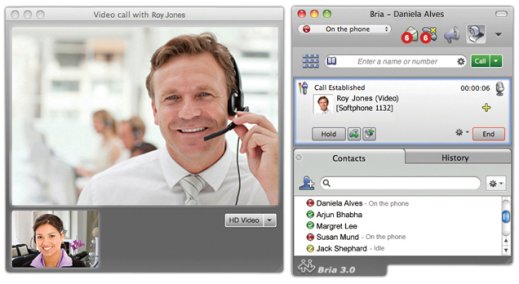
A Bria Softphone from Counterpath offers the flexibility of managing incoming and outgoing voice or video phone calls from your desktop. This softphone with click to call capability compliments or can completely replace your business phone hardware. It integrates with any business VoIP service.
Why We Love The Bria Softphone Solution
We have continuously recommended and supported Bria solutions because they integrate so easily with the hosted business VoIP and SIP phone services we offer. Because we use a privately managed voice network, our VoIP lines never travel over the public Internet. This ensures better call quality. Combined with Bria, this is a very cost efficient business phone service for our clients.
With Bria, users receive voice and video calling, presence, contact management and voicemail support, plus they can save money. No heavy investments in phone handsets or hardware. Get started with our Bria configuration guide.
Updates: Bria 5 for Mac and Windows is now available with MS Office integrations, 1080p video and an improved user experience. Buy the latest Bria solution from CounterPath here for $49.99 USD per license, before prices increase to $59.95 USD on August 1st, 2019.
Bria Video Call (Bria 3 Softphone shown)
Bria Features Available
In addition to click to call / answer capabilities, Bria soft phones include instant messaging (IM), HD voice calls and you can see when all of your contacts are on or offline. The softphone integrates seamlessly with any business VoIP service. The latest version, Bria 4.1, also has add-ons for syncing with your Outlook email, as well as a screen sharing feature. Check out some important Bria Softphone features below.
Bria Video Guides
Our Lead Voice Technician, Matt Smith, has put together these user guide and setup videos on the Bria 4 Softphone. Two videos to watch; (1) an overview of the Bria 4.1 user interface and (2) how to transfer a call / conference using the softphone. Enjoy!
Bria 4 Softphone User Interface Overview Video
How To Transfer & Conference Calls Using Bria 4 Softphones
What Is A Bria Softphone?
The Bria softphone is based on a SIP application built using open standards, which assists you manage your voice and video communications from your desktop.
A Bria softphone can completely replace or complement your desk phone, using our cloud based pbx service. Make voice or video calls, instant message and see when your contacts are available. You can also transfer files using this app.
The latest version of Bria has been enhanced with features for business and enterprise users. It can be deployed manually or by using a server.
Contact Us on voice service with a flexible Bria softphone solution. Save 20% on 10+ voice lines. Save 40% on 20+ lines.
Bria Softphone Features
Available for Windows, Mac, Linux and with the Bria iPhone app.
Enhanced media engine providing significant voice quality improvements.
VP8 video and SILK HD voice codecs.
API enhancements to expand call handling features, support of authentication of the connecting client and remote login and logoff.
New webkit library that provides better content rendering and improved stability within the web tabs in Bria.
Bria Add-In for Outlook that enables calls directly from Microsoft Outlook emails and contacts (Windows only).
About Fastmetrics, Inc. Building & Business ISP
Since 2002, Fastmetrics is the Bay Area’s only dedicated business ISP. We provide telecommunication services in California and the San Francisco Bay Area. Reliable service – backed by better live and local support. From install to 24-7 proactive monitoring, get treated like a VIP customer. Not a number by a faceless call center. We specialize in managed business internet and phones, dedicated high speed business fiber internet, business WiFi, SIP voice solutions / UCaaS and managed network services. We are a Microsoft and Cisco Meraki Partner. Our team are Certified Cisco Specialists, Ubiquiti Enterprise Wireless Accredited and Polycom Authorized Solution Advisors. We take care of your business network, so you can focus on growth.
What Is Cloud Computing? How Does ‘The Cloud’ Work?
What is cloud computing? How does it work? The term “cloud” when talking about technology or computing, is not new. In simple terms, ‘cloud’ is a metaphor for the Internet. In fact, cloud symbols are repeatedly used to depict the Internet on diagrams. If you think of the Internet as a virtual ‘space’ that connects users from all over the globe, it is like a cloud. It shares information by the way of networks.
So, if we go back to the question of what cloud computing actually is, it refers to sharing resources, software and information through a network. In this case, via ‘the Internet’ or more correctly, an Internet connection. Information and data is stored on physical or virtual servers, which are maintained and controlled by a cloud computing provider, such as Amazon and their AWS product. Amazon offer their cloud connect aws which is a great cloud solution. As a personal or business cloud computing user, you access your stored information on the ‘cloud’, via an Internet connection.
What Are The Different Types Of Cloud Computing?
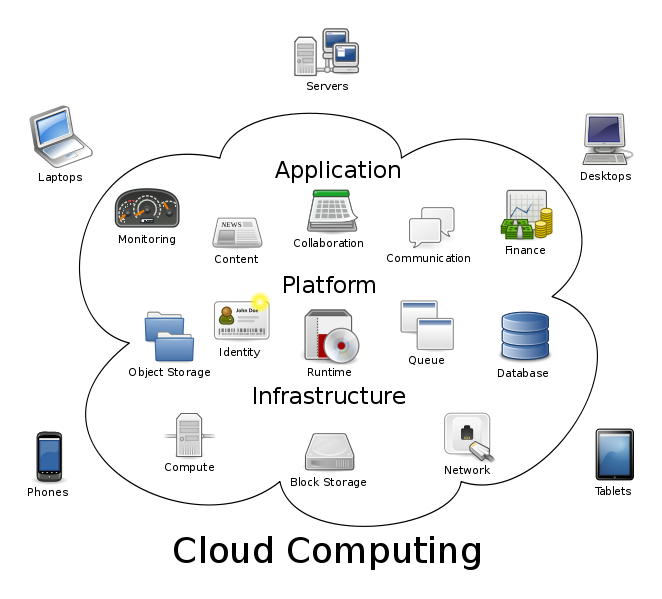
Cloud computing can mean many different things these days, but there’s three main categories of cloud services. You might have heard about these or use them already; Software as a Service (SaaS), for example – Microsoft 365, Platform as a Service (PaaS), example – salesforce.comand Infrastructure as a Service (IaaS), example – Rackspace.
‘The Cloud’ Covers Many Different Technologies Today
What Are Popular Examples Of Cloud Computing Services At Work Today?
There has been a significant evolution in the way in which we save, store and access data. You no longer need to save documents on one particular device. You can access personal files and data from anywhere with a solid Internet service connection, at any time. That’s all because of cloud technology. The cloud storage market spoils you for choice too.
A variety of cloud storage providers are available, many of which offer free storage space. Out with file saving on floppy disks, CDs and even USB flash drives, in with cloud storage providers such as Dropbox, Box.com and Backblaze. (Sites like Cloudwards allows you to compare a range of different cloud storage providers in one place).
Physical servers are now virtual via cloud computing
How Does Cloud Storage Work?
Via an Internet service connection, cloud storage works by enabling users access and to download data on any chosen device, such as a laptop, tablet or smartphone. Cloud storage users can also edit documents simultaneously with other users as well, making it easier to work away from the office. Depending on specific needs, prices vary for cloud storage. As an individual user, you can usually get initial amounts of cloud storage for free – such as 5GB with Apple iCloud, which previously dealt with some highly publicized cloud security issues. You have to pay a fee for additional storage. Common price models include monthly or yearly rates, depending on the services you are using.
How Else Does ‘The Cloud’ Make Work Easier?
Other cloud based services include cloud hosting and servers, offered by companies such as Rackspace. You can see PaaS in action with the Fastmetrics cloud phone service, which offers a cloud PBX phone system, hosted securely in the cloud. Another example is this server for free video conference calls, for anyone from anywhere, without the use of software.
How Does Cloud Computing Work?
To understand the workings of a cloud system, it is easier to divide it into two sections: the front end and the back end. They are connected to each other through a network, usually the Internet. The front end is the side of the computer user or client. The back end is ‘the cloud’ section of the system.
The front end consists of the client’s computer or computer network. Also the application essential to access the cloud system. It is not necessary that all cloud computing systems have the same user interface. On the back end of the cloud technology system, there are various computers, servers and data storage systems that make up the cloud. A cloud computing system could potentially include any computer program, from data processing to video games. Generally, each application will have its own dedicated server.
What Are Some Risks Of Cloud Computing Technology?
Large companies often require hundreds of digital storage devices. Cloud computing systems need at least twice the number of devices to keep client information stored. That’s because these devices occasionally break down. A cloud system makes copies of clients’ information, to store it on other devices. This method of making copies of data as a backup is called redundancy. Read the latest cloud security news, updates, how-tos and reviews or watch cloud security videos via Networkworld here. Additionally, here is another useful resource which helps explain some of the considerations of cloud computing security.
How Is Cloud Computing Technology Managed?
A central server manages the cloud system. It’s purpose is to manage traffic and client demands to ensure everything runs smoothly. It pursues a set of rules called protocols and uses a special kind of software known as middle ware. Middle ware permits networked computers to communicate with each other.
How Is Cloud Storage Managed & How Do Cloud Service Providers Store So Much Data?
If the cloud service provider or cloud technology company has multiple clients, there’s likely to be a high demand for storage space. It’s possible to ‘fool’ a physical server into thinking that it’s actually multiple servers, each running it’s own independent operating system. This technique is known as server virtualization, which reduces the need for physical machines. This method maximizes the output of individual servers.
So there we have it – a very short look at what cloud computing involves and how database as a service providers works. Also some use cases and risks for this rapidly growing technology, referred to broadly as ‘the cloud’.
About Fastmetrics, Inc. Building & Business ISP
Since 2002, Fastmetrics is the Bay Area’s only dedicated business ISP. We provide telecommunication services in California and the San Francisco Bay Area. Reliable service – backed by better live and local support. From install to 24-7 proactive monitoring, get treated like a VIP customer. Not a number by a faceless call center. We specialize in managed business internet and phones, dedicated high speed business fiber internet, business WiFi, SIP voice solutions / UCaaS and managed network services. We are a Microsoft and Cisco Meraki Partner. Our team are Certified Cisco Specialists, Ubiquiti Enterprise Wireless Accredited and Polycom Authorized Solution Advisors. We take care of your business network, so you can focus on growth.
Cloud Phone System Benefits & Considerations For Businesses
About 75% of businesses globally have shifted to some kind of cloud based service or platform. Business analysts have predicted that the worldwide market for cloud services will reach a value of about $158.8 billion this year. Cloud phone system benefits cover businesses of all sizes, from startups to large global companies. Many offer advanced unified communication features that businesses need to succeed, in the fast paced business environment of today. In the past, businesses had to rely on the use of physical and on-site equipment, (such as PBX cabinets) for phone systems and applications. Now, with the increasing shift to the cloud, these systems and applications can be stored safely in off-site data centers.
Below you’ll find the top reasons why savvy business owners are joining the shift to cloud hosted voice or phone systems. Also below, an infographic detailing the main cloud phone system benefits. As well as key considerations and questions to ask if weighing up a switch to the cloud from your current phone service.
1. Cloud Phone Systems Cost Less
One of the major cloud phone system benefits is the large cost savings when compared to traditional phone services. Cloud based communications eliminate the need to pay up-front for heavy and expensive installations. Not to mention the regularly occurring maintenance charges of a traditional phone system. When you host your phone system on the Internet, you’ll be charged on a usage basis only. You pay only for hostage space and bandwidth that you require. Cloud phone systems also offer access to high-end features and upgrades for minimal to no cost. Commonly, set monthly fees per phone line or ‘seats’, are offered by cloud phone providers.
A cloud phone service even negates the need for physical phones!
2. Cloud Based Phone Systems Offer Rich Features
Cloud based phone systems provide users with a variety of standard features, as well as voicemail, advanced email and automatic attendants and many more unified communications options. Some more advanced features include traffic shaping such as MPLS, which is useful in preserving bandwidth. It also helps in ensuring call quality and reliability. Some providers such as Fastmetrics, offer cloud voice over privately managed networks, so voice traffic never travel on the public Internet. Cloud phones can also connect with two different on-site Internet circuits, which is useful in providing backup.
3. Cloud Business Phone Systems Are Flexible
Cloud phone systems benefit businesses with access to the latest voice features without any hardware updates. Whether your business is growing or downsizing, a cloud service will provide the flexibility the business needs today and for future growth.
4. Cloud Based Services Are Easily Scaled
It is the aim of any business to scale. So should their phone system. For anyone who has had to expand or move an on-premise phone system, they will surely know the degree of difficulty involved. Lots of equipment, lots of man-power and lots of careful moving, of large hardware. A phone system in the cloud is easily and quickly organized. The only shifting required is of handsets or cables, without any extra burden on your business IT department.
Infographic: Key Cloud Phone Service Benefits
9 extra benefits when moving to a cloud phone service
5. Cloud Telephony: Mobility Apps & Remote Work
What business doesn’t need continuous communication today? A cloud phone system benefits and empowers businesses with off-site work forces and remote employees. Cloud hosted systems provides the ability to communicate with all co-workers and customers, no matter their location.
6. Disaster Recovery With A Cloud Telephony System
Your business phone system should never go down. Ever. It needs to be up 24/7 to support your customers and to receive inbound sales, leads or new business. A cloud phone system benefits by protecting against loss of business voice in case of disasters. Utilizing the cloud ensures a reliable and resilient phone service, always.
7. Cloud Phone Service Expands Uniformity
With cloud phone systems, companies with varying locations can deploy a more unified phone system with remote offices setup efficiently. All users experience the same call quality, plus the same features.
8. A Cloud Phone System Benefits IT Teams
Your business IT department will have many things to focus on, without adding phone system maintenance to their work load. Cloud phone system benefits are possible as a vendor manages your system off-site. Your IT department will be free to focus on issues that have higher priority.
9. Improved Information Security
One of the great advantages of the cloud, especially a private cloud solution, is that there is no fear of sacrificing data security when you allow company data to exist, outside the local firewall. Security is increased when a client uses a cloud phone service for business due to stringent ISO security standards that cloud providers should always adhere to.
10. Decreased Time To Value
Time to value with cloud phone services is quite less than on-site phone services and applications. Not only is implementation time decreased, but the IT resources required to roll out the cloud solution are also significantly less.
For example, if you’re a Silicon Valley startup and you need to get on the phone to cold call prospects or potential investors, a cloud based phone system provides a faster avenue to do this. As you grow and hire another sales team member, their phone system can be setup instantly. There is no need for an IT person. Just a simple call to your cloud business phone system vendor, to have the same phone functionality and features to grow your business.
Considering A Cloud Phone System?
Today, e-mails, texts and instant messaging accounts for a significant portion of daily communications. However, a good old fashion phone call is far from obsolete. That’s particularly true in the business world. Regardless of business size or industry, a reliable phone service is a necessity. As with many business decisions, selecting the right business phone system for your specific needs can be overwhelming. In the past, many businesses were forced to implement a Public Branch Exchange (PBX). A PBX is an on-premise or on-site telephone network. A PBX required bulky hardware, dedicated storage and a significant investment in management and maintenance. As such, a PBX phone system often lacked affordability, flexibility and security.
Take office phone presence with you, via a flexible cloud setup and mobile apps
Thanks to ongoing advancements in networking and digital technology, the traditional PBX is no longer the only option when it comes to business phone systems. Instead, many businesses and organizations are turning to external virtual hosted PBX solutions, also referred to as cloud phone systems. A cloud phone system is managed off-site and accessible anywhere online. These IP powered phone systems make it easier for businesses to tap into enhanced communication features, without investing in on-site management and maintenance.
Not sure if cloud phones are right for you? Below are 5 more reasons why today’s businesses are opting for the convenience, versatility and cost-effectiveness of cloud phone systems.
Cloud Phone System: Less Maintenance & Administrative Requirements
Businesses employing traditional PBXs must train, certify or designate an individual (or multiple) employees or hire external contractors to manage and maintain a PBX phone system. This limitation can create an environment where maintenance and updates are not only disruptive, but inefficient and costly. This can unnecessarily eat away at budget or other critical ITC tasks, preventing business growth and development.
A cloud phone system is hosted off-site. It is managed by a phone service provider. Business owners no longer need to sacrifice excessive financial or human capital to obtain reliable phone service, with enterprise-level features and functionality. Administration of a cloud phone system is also simplified. Simple online access, like this web based metricPHONE dashboard, allow easy control of phone functions and setup. At any time, anywhere. No advanced IT work is required – anyone phone user can do it. Remote workers can be efficiently setup with phone service too. Shifting phone service from on-premise hardware to a cloud based solution, empowers users to make changes efficiently. Adding rules or setting up out of office, can be done with the click of a button.
Improved Security & Disaster Recovery
When businesses rely on an on-premise PBX, they’re typically housing all their equipment in a single location. This leaves a phone service vulnerable to everything from human error to power failures, fires, or natural disasters. Conversely, a cloud hosted PBX utilizes remote data centers to mitigate that risk. Servers are protected by layers of physical and network security. This makes it difficult for outside threats to compromise services and information. Along that same line, many cloud phone systems provide redundancy to keep service secure and accessible.
A Cloud Phone System Provides Global Reach
As the needs of a business, as well as their customers and employees extend beyond the physical boundaries of a single building, the importance of a communication system that can adapt to that need is essential to both scalability and security, not to mention a business’s reputation. Because cloud phone systems can seamlessly integrate with mobile devices, owners and employees alike have access to the phone system regardless of where they are, allowing for seamless productivity. The same is true for companies that have or expect to have multiple locations. A cloud PBX can connect all locations with a unified front (e.g., one phone number can route calls to locations around the globe).
Cloud Flexibility & Remote Workforce Presence
Planning on scaling up business? Opening a new branch and need immediate access to phone based communications? With a cloud phone system, businesses can enjoy increased adaptability without sacrificing their bottom line. This flexibility isn’t limited to phone lines, which can be added and removed as needed. It is also attributed to mobile presence by smart phone apps and features which enable a truly mobile workforce.
Remote workers can be easily setup with business phone service with a cloud based system
Fastmetrics for example, offers customers access to a robust list of included voice features. These include basic business phone service requirements such as call forwarding, conferencing, auto attendants and voicemail to text. Also numerous advanced options, such as click-to-dial CRM integration via the metricCRMconnect Chrome extension.
Service & Phone Call Cost Savings
Cloud business phone systems negate the need for unnecessary hardware maintenance, management and advanced administration. This is typically associated with on-premise PBX systems. In turn, companies can adapt and change as necessary. This brings significant savings to those who make the switch to cloud phone services.
How much can you save? That depends on a variety of factors, such as the number of lines you need. A recent report by Transparency Market Research suggests the cost of phone system ownership can decrease significantly, via a cloud based or virtual PBX. Other reports frequently suggest savings near 60% to 90%, particularly when international calling costs are factored in.
This notion is supported by Fastmetrics business phone service rates. We provide monthly phone service for as little as $20 a line, or ‘seat’. Our metricPHONES are a completely managed service to ensure voice quality. It enables businesses to meet customer needs, whilst maintaining a cost-effective and versatile service. In order to remain competitive in today’s market, business owners must continually strike a balance between affordability and functionality. When it comes to communication, cloud phone services represent a way to achieve that goal. Got questions about a cloud phone system or service benefits? Contact us.
Key Business Questions & Cloud Phone System Considerations
A cloud PBX can change how you do business, increasing flexibility, responsiveness, mobility and efficiency, while aiding you in improving customer service. But all those benefits are only possible if you choose the right system for your business. With so many options to choose from, it is important to have the right information, to make the best decision possible. We have compiled a list of what you need to know before committing to a cloud PBX system.
1. Does A Cloud Phone System Meet Business Needs?
Can the hosted cloud PBX system you are considering support enough users for your business? What about in the future? Can it expand as your business grows? Not all cloud phone systems have the option of adding users easily. A comprehensive cloud PBX can serve many purposes in your business and save you a lot of money, because you don’t have to invest in different office equipment.
Certain cloud based phone systems include / provide functions which allow a user to;
…and more. These and other virtual and unified communication features can save you from the need to purchase additional equipment or software later on. Tip: Before choosing your cloud phones, take the time to make a list of the telephone related needs of your business so you can choose a system that meets those needs.
Fastmetrics hosted cloud PBX uses a private voice network
2. Can This Cloud Phone System Work With Multiple Locations & From Home?
If you have a single location, with no remote employees, you will have greater choice in hosted cloud phone systems. Don’t automatically assume that a system will work for multiple locations. Ensure that the cloud PBX system you are investing in can cover all your locations, and that free local calls and long distance calling between these locations is included in your package. Find out if you can transfer calls between different locations (both local and remote). Getting such information upfront can save you money. Ensure that every location of your business has the same functionality and remains connected.
3. Can I Use The Phone Equipment Our Business Already Has?
While some phone systems require expensive telephone equipment, others work with the equipment you already have on hand – like business VoIP – or without the need to purchase any added hardware. If your business is just starting out, you may not have budget to invest in phones or equipment. If that is the case, be sure to check hardware requirements, as well as any setup and / or installation costs.
4. What Is The Startup Procedure & Cost?
Some cloud phone systems are free of charge to setup and require no special equipment. These hosted PBX systems can typically be up and running within 24 hours. However, this is not the case with every hosted phone service provider. Tip: Ensure that you know what to expect in terms of startup costs and fees, before committing to any hosted business phone system.
5. What Level Of Customer Support Is Provided?
Customer service and responsive technical support is important when your business phone system is cloud based. Tip: If you have problems, you want to ensure that you have timely assistance to minimize any downtime, or loss of important business calls.
6. What Usage Based Fees Are Charged In Addition To The Monthly Rate?
It is important to know exactly how much your new business telephone system will cost you. In addition to monthly rates, some cloud PBX system providers charge for things such as:
Long distance calls
Extra extensions (some providers include these)
Additional users
Number of minutes of telephone use (some providers provide unlimited free calls / minutes)
Voice mail (often included)
Additional inbound numbers (1-800 numbers are usually an extra cost)
Tip: Also factor in any additional fees necessary for your Internet service. (Your business internet service may need to be upgraded, in order to provide enough bandwidth to support voice over IP calls). Adequate internet bandwidth is also necessary to ensure call quality and reduce packet loss. QoS (Quality of Service) is essential for any cloud PBX you are considering.
7. Can This Phone System Be A Disaster Recovery Solution?
Many cloud phone services can be accessed from anywhere. Because setup is all in the cloud, you have exactly what you need at your fingertips. Fast access can be via the Internet from a smartphone app, or even a softphone on a laptop. This means that in case of disaster, your company is more resilient and can get back up and running faster than businesses relying on older phone systems. The benefits of a cloud PBX are many. Save energy, be kinder to the environment, cut costs, and more by making the switch to a virtual or cloud phone system today.
Cloud Business Phone Service Benefits…Continued
The way your business manages internal and external communication, significantly impacts everything from employee productivity and satisfaction, to customer relations and retention. A key element to this communication is your business phone service. In the past, many companies opted for an on-premise Private Branch Exchange (PBX) to connect employees with other employees. As well as facilitate phone conversations with employees and external clients, vendors, etc.
While on-premise PBXs (refers to a PBX installation within the Local Area Network or LAN), do fulfill many communications needs, today’s digital and global world can make it difficult for those systems to adjust. This is due to the increased demands and flexibility required of today’s telecommunications. Fortunately, as cloud server technology becomes a standard in today’s computing world, so does the notion of a cloud business phone service. And today, many of these services – like the Fastmetrics cloud business phone service – offer small businesses an enterprise-level phone service at an affordable price.
Despite the continual growth of cloud-based services, many companies may be hesitant to make the jump. It is assumed that migration, integration and long-term use can be both complex and costly. However, those who do make the switch typically find their decision to boast long-term benefits to their operations and their bottom line. Though the reasons are many, here are a few more major points to consider if you’re thinking of making the move to a cloud-based phone service.
Easy Administration and Maintenance
As a hosted service, cloud business phones negate the need for onsite hardware, maintenance, and management. Without the need to worry about hardware configuration or ongoing maintenance, businesses can take full advantage of a cloud-based phone service (and all its features) without straining internal resources. We find this to be particularly beneficial for companies with a minimal IT staff, as our customer service can work with office managers and administrators to keep things up and running with, negating the need for the strong technical skills often required for on-premise solutions.
Mitigation Of Risks & Easier Disaster Recovery
On-premise PBX solutions operate off hardware housed and managed within your facility; this also makes them uniquely vulnerable to localized fires and power failures, human error, and natural disasters.
Though any location can be vulnerable to those circumstances, a cloud business phone service offers fail-over capabilities, mitigating the risk of potentially disastrous interruptions of service through server redundancy. To put it simply, cloud-based services eliminate reliance on a single piece of equipment by employing multiple servers, meaning mass outages, data interruptions, and ultimately operational and financial loss can be avoided.
A Cloud Business Phone Service Is Easy To Scale
For many organizations, one of the most attractive aspects of a cloud business phone service is the ability for it to grow and adapt as needed, and that flexibility can meet a variety of needs both in the future or throughout a single fiscal year. Businesses that plan to increase their personnel or open another location within the next few years can start small and easily expand without the hassle of on-site updates and configurations. Similarly, companies that rely on a phone service to handle seasonal call volume will find it’s easy to increase and decrease functionality as needed.
Unlimited Remote Solutions
Today, many find the ability to work remotely can increase productivity and accommodate the needs of a global market. For that reason, employees at various levels are often engaging in workplace activities outside of the office.
Though often beneficial, this can lead to gaps in an otherwise unified communication front. This problem, and the price to resolve it, increases substantially if a remote workforce is part of an overarching business strategy. However, cloud-based business phone services can offer an easy and cost-effective solution for remote work by allowing employees to access office phone services through apps installed on their desktop or mobile phones, allowing for easy internal and external communication that upholds both functionality and brand perception.
Significant Phone Bill & Service Savings
Though the benefits and perks may seem indicative of increased spend, the opposite is true. In fact, small businesses that decide to make the switch to VoIP services can save up to 45% on their monthly phone bill. Long distance calling, maintenance and technical oversight, migration or employee line changes, and equipment can all be costly. But cloud business phone servers can eliminate or decrease the amount spent on those common needs.
Additionally, because the use of cloud-based phone systems is becoming more frequent in today’s business world, top providers, including Fastmetrics, offer feature-rich packages and other perks, such as free phone upgrades as part their basic services, which can increase efficiency and internal organization without tacking on additional fees and charges. Cloud business phone services can provide organizations with the flexibility and functionality they need at a cost that is typically lower – in both direct and indirect expenses – than alternative business phone services.
About Fastmetrics, Inc. Building & Business ISP
Since 2002, Fastmetrics is the Bay Area’s only dedicated business ISP. We provide telecommunication services in California and the San Francisco Bay Area. Reliable service – backed by better live and local support. From install to 24-7 proactive monitoring, get treated like a VIP customer. Not a number by a faceless call center. We specialize in managed business internet and phones, dedicated high speed business fiber internet, business WiFi, SIP voice solutions / UCaaS and managed network services. We are a Microsoft and Cisco Meraki Partner. Our team are Certified Cisco Specialists, Ubiquiti Enterprise Wireless Accredited and Polycom Authorized Solution Advisors. We take care of your business network, so you can focus on growth.